
Computer Guided Dental Implants
The implant position is decided on a 3D scan first, and a surgical guide puts it exactly where the plan said — not where the eye estimated.
- Shop 5/23-26 Station St, Kogarah NSW 2217
- Mon–Wed & Fri 9:00am–5:00pm · Thu 9:30am–6:30pm · Sat 9:00am–1:00pm
- (02) 9281 0007
Village Dental Kogarah uses computer-guided implant placement — combining CBCT 3D imaging with custom surgical guides for submillimeter precision during implant surgery. Your Village Dental dentist plans every implant digitally before touching the patient, then uses a 3D-printed guide to place the implant exactly where the computer planned it — avoiding nerves, sinuses, and adjacent roots. Patients from Kogarah, Rockdale, Bexley and Banksia get safer, faster, more predictable implant results. Schedule a guided implant consultation or call (02) 9281 0007.
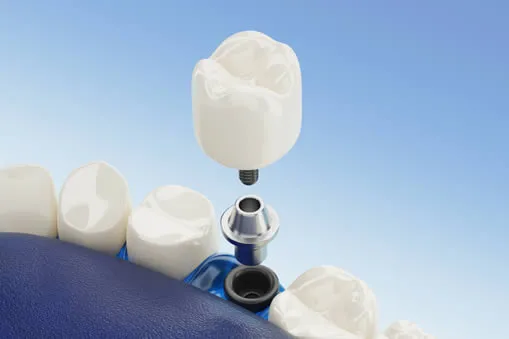
Experience Precision Implant Placement Like Never Before
Computer Guided Dental Implants is an advanced technology used in dentistry to improve the precision and accuracy of dental implant placement. It involves the use of 3D imaging technology and specialised software to create a virtual model of the patient’s mouth, which can then be used to plan the placement of dental implants. This technology allows dentists to place dental implants in a more predictable and accurate manner, resulting in a more natural-looking smile and improved overall oral health.
During the procedure, a small titanium post is placed into the jawbone to support a replacement tooth or teeth. Traditionally, the implant placement has been done manually using surgical guides and experience of the dentist. However, with computer-guided implant placement, the surgeon can use the virtual model of the patient’s mouth to plan and place the implant with a higher degree of accuracy, and without the need for invasive surgery. The software provides detailed information about the bone density, location of nerves, and other factors that affect the success of the dental implant placement.
Computer Guided Dental Implants offer several benefits over traditional implant placement, including a shorter recovery time, reduced pain and discomfort, and improved accuracy. Additionally, the procedure is less invasive, making it a more attractive option for patients who are nervous about dental surgery.
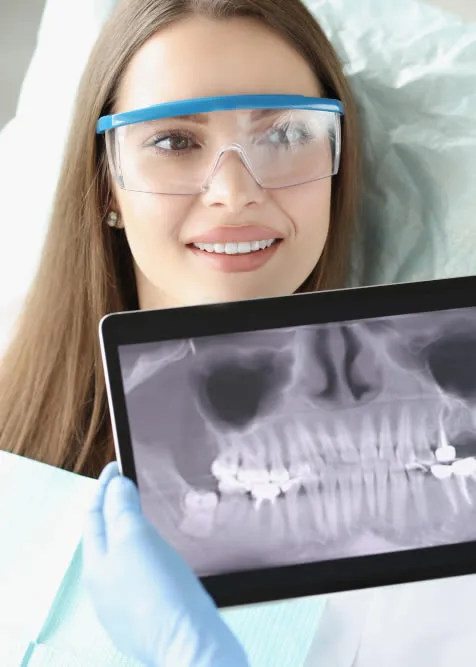
what are the Advantages Of 3D Guided Dental Implants Surgery
There are several advantages to 3D Guided Dental Implants surgery, including:
- Increased Precision: 3D guided implant surgery offers a higher level of precision compared to traditional implant surgery. With the use of 3D imaging technology and computer software, the dentist can plan the exact location, angle, and depth of the implant before the surgery. This results in a more accurate placement of the implant, which leads to a better aesthetic outcome, more comfortable fit, and improved functionality.
- Reduced Risk: 3D guided implant surgery is less invasive than traditional implant surgery, which means there is a reduced risk of damage to surrounding tissues and nerves. The precise placement of the implant reduces the risk of complications and ensures the implant integrates correctly with the jawbone.
- Faster Recovery Time: The reduced invasiveness of 3D guided implant surgery typically results in a faster recovery time. Patients may experience less pain and discomfort after the procedure, and they may be able to resume their normal activities sooner.
- Predictable Results: 3D guided implant surgery allows the dentist to plan the entire implant placement process before the surgery. This means the results are predictable, and the patient can have a more accurate idea of the final outcome of the procedure.
- Patient Comfort: Patients who undergo 3D guided implant surgery expierence more comfortable due to the reduced invasiveness and increased precision of the procedure.
Why Choose This Treatment
Precision Computer Planning
Every implant is planned to the millimetre using 3D bone data — angle, depth, and diameter are determined digitally before surgery, eliminating guesswork entirely.
Minimally Invasive Surgery
The surgical guide allows implant placement through small, precise openings — reducing trauma to surrounding tissue, minimising bleeding, and accelerating healing.
Reduced Chair Time
Digital pre-planning and the surgical guide streamline the actual placement procedure, reducing the total time in the chair and the complexity of surgery day.
Better Implant Positioning
Implants placed at the precise planned angle and depth integrate more reliably, support the crown more effectively, and deliver superior long-term aesthetic results.
Predictable Long-Term Results
The entire outcome is mapped digitally before surgery begins — giving patients and your dentist shared confidence in a highly predictable, long-lasting final result.
Is Computer Guided Dental Implants Right for You?
Computer Guided Dental Implants is a good fit if you are:
- Patients with implants planned near the inferior alveolar nerve
- Patients with upper-jaw implants near the sinus floor
- Patients with complex anatomy or limited bone
- Patients who want faster, more comfortable recovery
This may not be the right option if:
- Simple single-tooth implants in an easy location (may not need guided)
- Patients for whom CBCT is contraindicated
What to Expect During Your Computer Guided Dental Implants Visit
Here is exactly what happens at your appointment at Village Dental Kogarah. Knowing each step makes the experience far less intimidating — and lets you relax knowing what comes next.
- 1. CBCT scan. A 3D scan captures your jaw in full detail. The scan is imported into digital planning software.
- 2. Digital planning. Your Village Dental dentist plans the ideal implant position, angle, and depth on the computer — accounting for bone density, nerve position, and the planned crown restoration.
- 3. Surgical guide fabrication. A custom 3D-printed guide is made — it fits over your teeth and has a cylinder that directs the implant drill to the exact planned position.
- 4. Guided surgery. On surgery day, the guide is placed in your mouth. Your Village Dental dentist uses it to drill and place the implant with submillimeter accuracy. Surgery is typically faster and less invasive than freehand.
Common Concerns About Computer Guided Dental Implants
These are the questions patients at Village Dental Kogarah ask most often before committing to treatment. Your Village Dental dentist addresses each one honestly at your consultation.
"Is guided surgery really different, or is it just marketing?"
It's real and measurable. Studies show guided implant placement is significantly more accurate than freehand — with precision measured in fractions of a millimetre. For cases near nerves or sinuses, that accuracy matters.
"Does it cost more?"
There's a modest additional cost for the CBCT scan and 3D-printed surgical guide, but it often reduces surgery time, minimises post-op recovery, and prevents expensive complications. The value is real.
"Is it more uncomfortable than traditional surgery?"
Usually less. Because the drill follows a pre-planned path, surgery is faster and often uses a smaller incision (or even no incision — flapless). Most patients report less swelling and faster recovery.
Risks and Considerations of Computer Guided Dental Implants
Every procedure has tradeoffs, and transparent conversation about them is part of informed consent. Your Village Dental dentist reviews these at your consultation and answers every question before treatment begins.
- Same surgical risks as traditional implant placement, but at lower incidence
- Possible small surgical deviation if the guide fits imprecisely
- Still requires the same healing phase as traditional implants
How We Approach Computer Guided Dental Implants at Village Dental Kogarah
Guided implant surgery is the default at Village Dental Kogarah whenever anatomy is complex — close to the inferior alveolar nerve, near the sinus floor, or in areas with limited bone. The computer plans the ideal position in three dimensions, and the drill follows exactly to that plan.
What guided surgery delivers is predictability. Surgery is faster, incisions are smaller, swelling is reduced, and the final crown fits better because the implant was placed precisely for the restorative plan — not just where it could be fit.
Reviewed by Dr. Anju Prajapati Maharjan · Village Dental, Kogarah NSW
Frequently Asked Questions About Computer Guided Dental Implants
Utilising advanced imaging technology, 3D guided dental implant surgery generates a precise 3D model of the patient’s jaw and teeth, facilitating the planning of the dental implant placement. Consequently, this approach leads to a more efficient, less invasive, and highly accurate surgery.
Contrary to popular belief, 3D guided dental implant surgery can result in minimal postoperative pain and discomfort due to its minimally invasive nature. Additionally, the precise implant placement minimises the risk of damaging surrounding tissues, thereby leading to a smoother recovery process.
On the contrary, 3D guided dental implant surgery can be a quicker alternative to traditional implant surgery owing to the accurate planning and execution of the implant placement. Furthermore, the utilisation of a surgical guide eliminates the requirement for extended incisions and sutures, leading to a faster recovery period.
The duration of recovery after the 3D guided dental implant surgery may vary based on the complexity of the procedure and individual patient. However, in general, most patients can anticipate returning to their regular activities within a few days to a week after the surgery. Your dentist will offer you comprehensive postoperative instructions to ensure a smooth recovery.
The expenses associated with 3D guided dental implant surgery may be slightly more than those of traditional implant surgery due to the need for advanced technology and specialised expertise. Nevertheless, most patients deem the benefits of 3D guided surgery, such as precision, efficiency, and long-term efficacy, to be worth the investment.
Although 3D guided dental implant surgery is an efficient and minimally invasive procedure, it may not be suitable for everyone. Your dentist will assess your unique case and determine if 3D guided surgery is the most appropriate option for you. Factors like the quantity and quality of bone, medical history, and overall oral health will be evaluated before making a decision.
Yes. At our Kogarah dental office we offer computer guided dental implants to patients from Kogarah and the surrounding area. Contact our office today to schedule an appointment.
Traditional implant placement relies on the surgeon's visual assessment during surgery. Guided surgery uses a CBCT scan, digital planning, and a custom 3D-printed guide that physically directs the drill to the exact pre-planned position, angle, and depth.
Guided surgery typically adds a small cost for the CBCT scan and surgical guide, but it often reduces surgery time and recovery. For complex cases, the precision more than justifies the small additional fee. Your Village Dental dentist will discuss cost at your consultation.
Many patients report less swelling and faster recovery with guided surgery because the procedure is typically less invasive — smaller flap or flapless technique is often possible. Local anaesthesia and optional sedation keep you comfortable during the procedure.
Medical Disclaimer
This content is for informational purposes only and does not constitute dental or medical advice, diagnosis, or treatment. Computer-guided surgery reduces but does not eliminate surgical risks. Possible complications include infection, implant failure, nerve irritation, and sinus involvement — the same as traditional implant placement. Consult your Village Dental dentist or a qualified dental professional regarding any questions about your oral health. Individual results may vary.
Before your visit, and after it
Most of what decides how a treatment goes happens outside the chair — what you bring with you, and what you do in the days afterwards. This is what we tell patients at Kogarah.
How to prepare
- A CBCT 3D scan and an intraoral scan are taken at the planning appointment.
- There is usually a gap of a week or two while the surgical guide is made.
- Bring a full medicine list; the surgical plan depends on it.
- Stop smoking for as long as possible before surgery.
Afterwards, and ongoing care
- Guided placement is usually flapless or near-flapless, so swelling is typically less than open surgery.
- Cold packs on day one, soft food, no chewing on the site until reviewed.
- No smoking, straws or vigorous rinsing for the first week.
- Integration takes three to six months before the crown is made.
- Yearly X-ray review of the bone level once restored.
Not sure whether something you are noticing is normal? Call (02) 9281 0007 and ask. You do not need an appointment to get an answer, and we would far rather hear from you early.
The materials and the technology we use
Both Village Dental practices are fully computerised, so planning happens on the screen beside you rather than being described to you. These are the specific materials and equipment involved in this treatment.
What goes in your mouth
- Titanium implant fixtures
- Printed surgical guide
- Guided drill kit
- Zirconia and porcelain implant crowns
What we plan it with
- CBCT 3D imaging
- Intraoral scanning
- Implant planning software merging the CBCT and the scan
- Digital X-rays for review
Talk to us about computer guided dental implants
Request a time online and we will confirm it with you, or call the practice and speak to someone who can answer your questions before you commit to anything.